 Zenith Wellness
You wake up, glance at your watch, and Body Battery says 25. The session you had planned suddenly feels like a question. Here is how to answer it.
Quick answer: A low Body Battery is a signal, not a stop sign. It usually means accumulated fatigue, poor sleep, or high stress, so a hard or long session is the thing to reconsider, not all training. Easy aerobic work is often fine and can help you feel better. Match the workout to the reading, and watch the multi-day trend more than any single morning number.
What Body Battery is telling you
Body Battery is Garmin’s energy estimate on a 0 to 100 scale, built from your heart rate variability, stress, sleep, and activity. It drains as you train and carry stress through the day, and recharges when you rest and sleep well. A low number in the morning means you went to bed depleted, slept poorly, or are carrying stress your body has not cleared.
That makes it a useful check-in. It does not, on its own, know what workout you had planned or how you feel.
When to train through it, and when to back off
The reading is most useful when you pair it with the type of session in front of you.
- Easy or Zone 2 planned: a low Body Battery is rarely a reason to skip it. Gentle aerobic work raises blood flow and often lifts how you feel. Go.
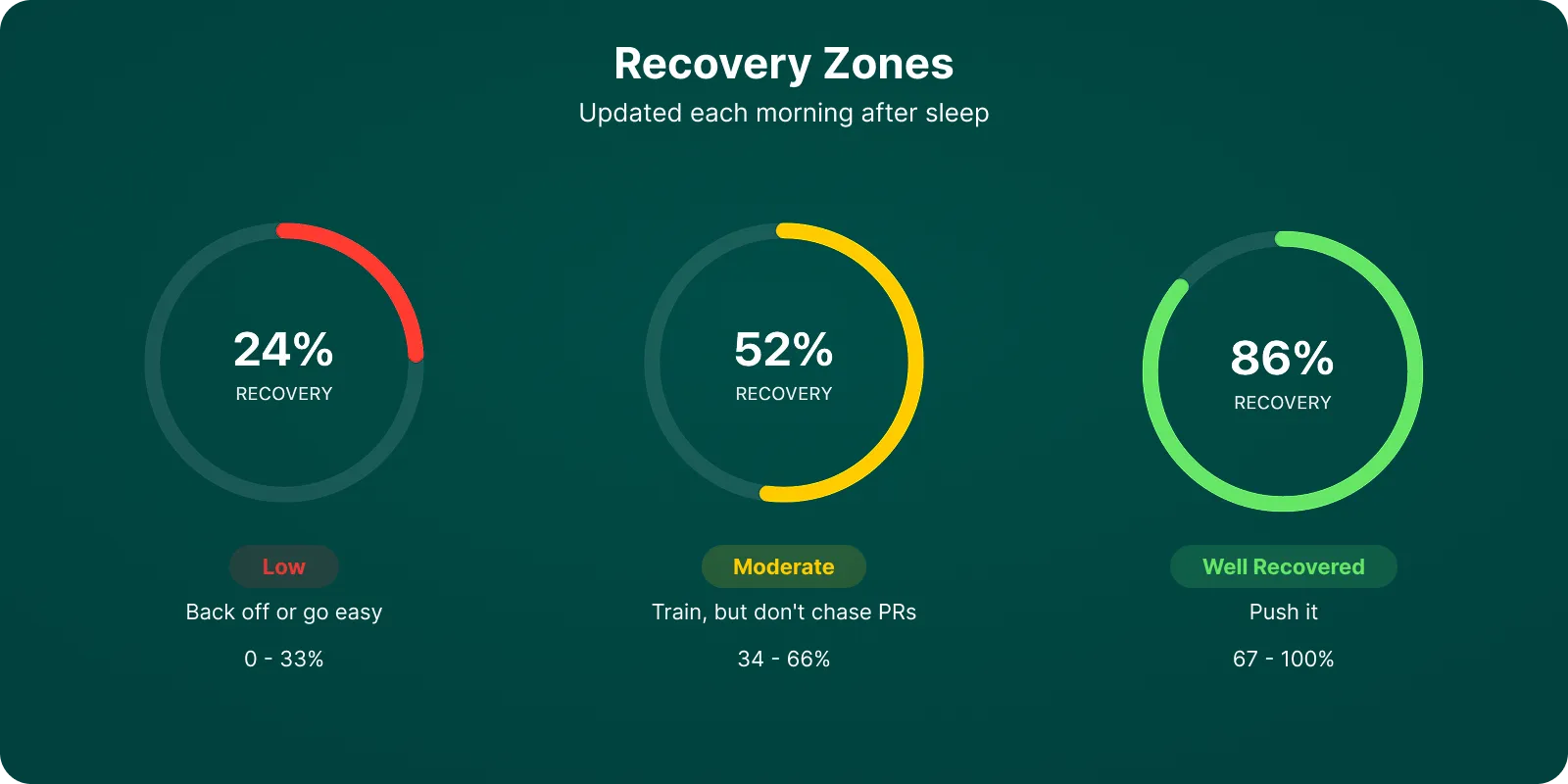
- Hard intervals or a long effort planned, battery below ~50: this is the case to reconsider. Stacking a demanding session on top of existing fatigue is what a low reading warns against. Swap it for easy work or move it a day.
- Low for several days running: that is the real flag. One low morning is noise. A downward trend across the week points to sleep, stress, or under-recovery that a single rest day will not fix.
How to recharge it
Body Battery responds to the same things recovery always has. Prioritize sleep quality and a consistent schedule, keep daytime stress in check, limit alcohol, stay hydrated, and protect your easy days. There is no shortcut that beats sleeping well.
Getting a training-aware second opinion
Body Battery tracks energy, but it does not weight your training load heavily, so a hard week can still show a decent battery after one good night. That is where a recovery score helps. Zenith reads your Garmin data and returns a morning recovery score that factors in your recent strain alongside HRV, resting heart rate, and sleep, so it answers a sharper question: how ready are you to train hard today. Used together, Body Battery tells you your energy and Zenith tells you your readiness.
For more on turning Garmin data into decisions, see the best Garmin app for recovery.