 Zenith Wellness
Garmin says 52 hours of recovery. You feel ready today. So which one do you listen to?
Quick answer: Garmin’s Recovery Time Advisor is a guideline for hard training, not a ban on all movement. Easy and Zone 2 sessions during the window are fine, so what it really argues against is stacking another hard effort before you have recovered. It can run conservative, so pair it with how you feel and your morning recovery metrics rather than treating the countdown as law.
What recovery time estimates
The Recovery Time Advisor predicts how many hours until you are ready for another hard effort, based on the intensity of your last workout and your metrics going into it. A demanding session on a tired, high-stress body reads long. The same session on a fresh body reads shorter. It is an estimate of cost, not a measurement of how recovered you feel right now.
That distinction is the whole answer to whether you should train during it.
Train through it, or wait?
- Easy or Zone 2 planned: go. Active recovery during the window supports the process rather than interrupting it. Recovery time is not telling you to sit still.
- Hard or long session planned, timer still high: this is what the number is for. Adding intensity before you have recovered is where injury and burnout risk climb. Move the hard session or swap in easy work.
- You feel great and the timer is still high: trust neither blindly. Do the planned easy portion, and let the first few minutes tell you whether the hard part is a good idea.
How to speed it up
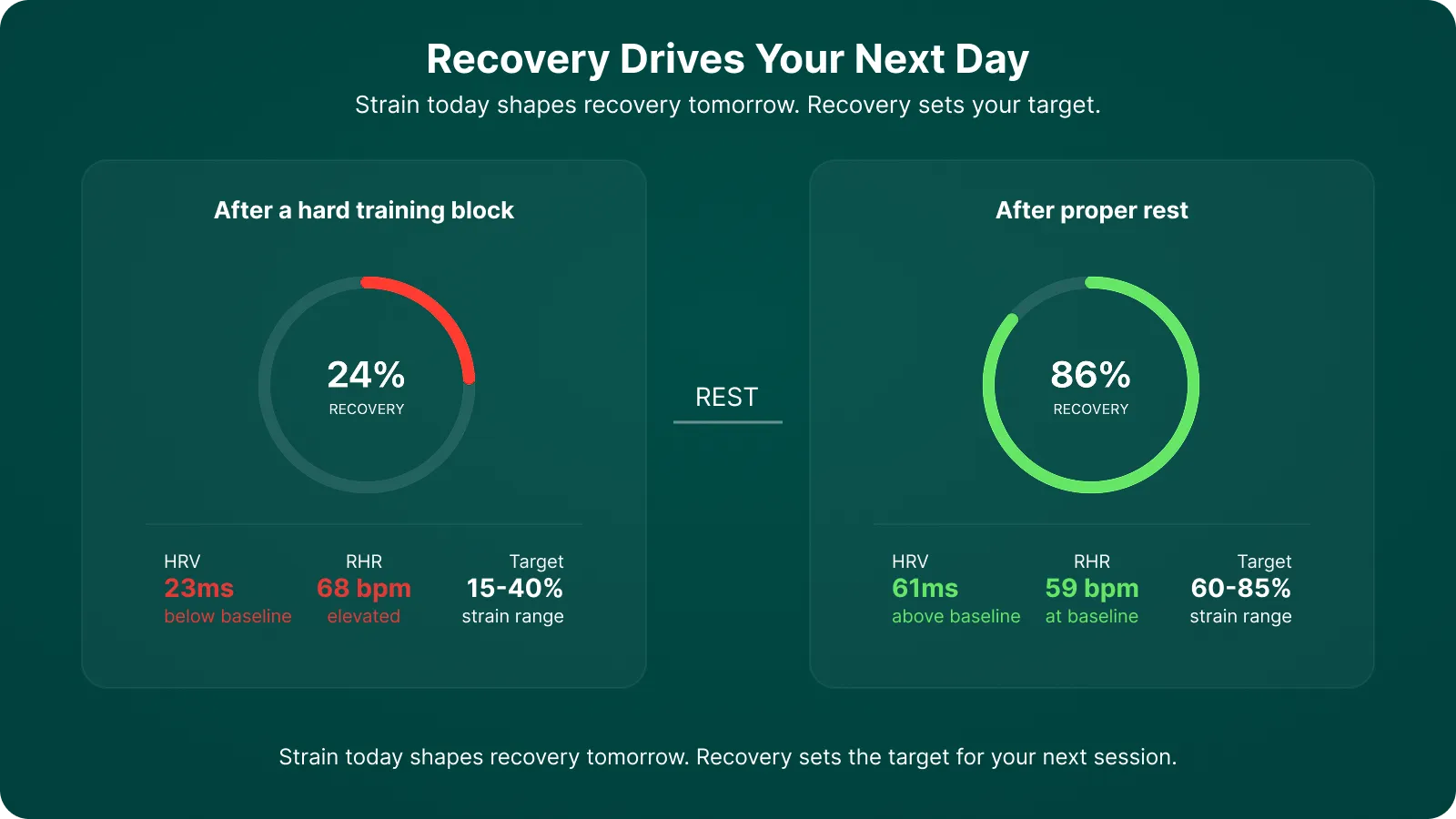
There is no trick that beats the fundamentals. Sleep well and consistently, eat enough with adequate protein, hydrate, keep daily stress down, and use light movement to promote blood flow. As your fitness improves, the same workout costs you less recovery time, because your body absorbs the load better.
When the number and your body disagree
Recovery time is one input, and a useful one, but it only knows your last workout and your recent metrics. It does not know that you slept nine hours or that you are fighting a cold. That is why pairing it with a readiness read helps.
Zenith reads your Garmin data and returns a morning recovery score built from HRV, resting heart rate, sleep, and your recent strain. Where recovery time counts down hours from your last session, Zenith reads your whole state today, so when the two disagree you have a second, fuller signal to break the tie. See the best Garmin app for recovery for more.